Tuesday, September 7, 2010

Samurai Champloo

Considering it as a text, as any good Liberal Arts student is taught to, Samurai Champloo can be interpreted as much as a commentary on the encroaching Westernization of Japan during its Edo period (and echoes in modern times) as it can be about family and friendship, and the changes those can elicit in people. It seems only appropriate, then, that I begin this by talking about college and one of my friends.


As huge fans of Cowboy Bebop during our early college years, a friend and I were eager to dig into the next series from the same creators when it was released in the U.S. While Bebop mixed scifi with a kind of Western/bounty hunter/jazz aesthetic, Champloo promised to be an irreverent mash-up of street/hip hop culture and wandering samurai tales. Since Japan has had a complex interaction with the West for hundreds of years, it seemed clever to juxtapose the initial 'opening' of Japan to the West with some ultra-modern Western cultural influences on the country. I ended up taking a course later in college called Post-War Japan that made the parallels and socio-political implications that much clearer. Anyway, the friend and I liked what we watched of it, but we never got past the first two DVDs, and eventually said friend and I graduated and drifted further and further apart.

Having recently finished the rest of the series, the two main things that strike me about Samurai Champloo are 1) it goes to greater tonal extremes than Bebop ever did and 2) it's a more “traditional” anime in a few regards. Bebop had some lighter/sillier episodes, such as 'Stray Dog Strut' and the justly famous 'Mushroom Samba', but by and large it was a much more serious series than most anime tend to be. Perhaps “mature” or “sophisticated” are better adjectives to use. There's a subtlety to some of the episodes that consistently catches me off guard, even during subsequent viewings, and almost all of the character arcs don't play out in the obvious, trite ways. Champloo, though, falls from time to time into the amusing-but-inessential-episode dilemma. These are the episodes of a series that are merely meant to be amusing and have no bearing on the characters' development or the main plot line. The baseball game and zombie episodes of Champloo, for example, are irrelevant to anything that happens before or afterwards. Speaking of irrelevant, the blood/violence factor is ratcheted up a notch or two in this series, thanks in part to the period appropriate weapons, but it all rings hollow and lacks true consequences. Mugen and Jin seem to get messed up and nearly die every other episode with no long term ramifications. What's more, the tragic endings to episodes like 'A Risky Racket' felt more forced than the poignant and bittersweet tone to Cowboy Bebop.


As for its more traditional feel, that's partially due to the usual anime stereotypes of over-exaggeration of facial features and emotional reactions. Part of why I think Cowboy Bebop is a more mature series is simply because it only has about half of the usual over-the-top anime expressive stuff. Mostly, though, Champloo is more traditional for the way its story progresses and ends. With Bebop, you had this long simmering character arc with Spike: Vicious and Julia were, respectively, the antagonist and romantic interest who popped up throughout the series. The friend I spoke of earlier expected that Spike would end up with Faye at the conclusion, since they're two of the main characters. This would be the obvious, traditional approach, but Bebop subverted that. Champloo may not end (SPOILERZ) with Fuu hooking up with either Mugen or Jin, but it allows all the main characters to survive. While it's true that having them go off without remaining together was an interesting way to end the series, it still feels traditional in the sense that they have all completed their growth as characters and learned all they could from each other, tying up the loose ends of their pasts in a mostly-neat bow.

My other issue with the series was its over-reliance on two-part episodes. There's fully four of them, and that's not counting the finale, which is practically a mini-movie in its own right since it's a three episodes long. There's nothing wrong with two parters in principle, it's just that they often felt unnecessary here. Champloo tries to juggle too many stories at a time rather than focusing on one character or event. When Bebop dipped into two parters, it was for epic story arcs that involved the main Spike/Julia/Vicious thread. Too often Champloo's two parters could've been edited down to a single episode if the focus were tightened. The final three-part episode is particularly egregious in this regard, since it suddenly throws in both a main villain to harass all three main characters and a group of villains out for revenge on Mugen specifically. None of these characters had appeared before, so it comes off as arbitrary and rushed. Mind you, Champloo had some loose ends—the hired killer that Jin is unable to defeat earlier in the series, the crazy-or-not Native American-type guy who Mugen says he's sure is still alive even after the dude dives over a cliff while on fire(!)—that never come up again but would have felt like excellent pay-offs if they were worked into the conclusion. Instead we got a bunch of villains thrown in at the last moment to give Mugen and Jin cool villains to fight. This type of thing happens in videogames all the time, but boss battles serve a purpose there. In an anime series, it's just cheap, unimaginative, and, well, traditional to a fault.


Unfortunately, that sense of “cool” things being thrown in just for the sake of being cool is most of what I took away from my finally-completed journey through the series. Samurai Champloo's chief flaw is that it spends too much time on getting appearances just right and not enough on the underlying personality and substance. However, I'll be blunt and say that I liked Champloo. It feels like this has all been about how the series didn't live up to my expectations, or how it wasn't as good as Bebop. I didn't intend such a thing, but it's hard to help it. Bebop is my gold standard for an anime series, and unless something is so totally unlike it as to be barely comparable (like Neon Genesis Evangelion), it's tough not to complain when the standard isn't met. The fact that this series is from a lot of the same people, and has many parallels in the characters and overall pacing/feel, doesn't make it any easier. Champloo is very similar to the album that comes after the best album by one of your favorite bands; you still like it quite a bit, more than most other albums, yet it doesn't have the same originality and magic, and suffers by comparison. As with such albums, the greatest praise I can give Champloo is that it when it's at its best, it matches its brilliant predecessor. There are some incredibly arresting moments to be experienced in Champloo, like the tense, mostly dialogue-less ending to the two-parter 'Misguided Miscreants', as well as some engaging stories and unique characters that are artfully executed. While I ultimately will keep Bebop as my gold standard, I still consider Samurai Champloo a must-watch for even the most dilettantish anime fans like myself, and a steadfast silver standard to boot.

4 Poorly Drawn Stars Out Of 5

Sunday, September 5, 2010

More Like...Redesign Pie

Ever since I first cobbled together the layout for Whiskey Pie, I've wanted something better. I'm passively asked a couple friends to take a shot at making this blog not look like crap, but none of them took me up on it. Oh well! The new design may take a bit of getting used to, but I much prefer the cleaner, more minimalist B&W look. Sadly, YouTube videos still aren't displayed properly...but I haven't done one of those for months anyway.

In other news, I'm going go try to get more posts done. I know I've been lax lately, but I've been re-thinking what I want Whiskey Pie to be.

What this means to you is that you'll be seeing more non-music and non-review content. I want t be able to muse on movies, videogames, books, as well as music, without having to cook up reviews with scores attached to them. Sometimes I'll to revisit things I have reviewed because I have more to say; sometimes I'll want to explore personal or cultural aspects of something. At the same time, I hope to start doing videos again. I haven't decided if they'll be like they were or something else. They're still really new to me and I'm trying to come up with a good format that works with the constraints of the equipment I have. Also, my charming personality and very exciting deliver. Oh wait...

Anyway, there's a slew of albums that have come out this year or that are soon coming out that I need to get to, so if you'll excuse me.

Enjoy.

-Greg Lytle

Thursday, August 26, 2010

The National- High Violet

Much like The Walkmen, The National are a band who never elicited much interest in me based purely on reviews and word of mouth. In this era of sub-genres and sub-sub-genres, I've developed something of a mental block against bands who have a timeworn, classicist sound that can't reliably be labelled anything other than rock or indie rock. There's something...plain and uninteresting about them, or so my logic goes. And then I actually listen to them and end up loving them. It may have taken until 2010 for me to get around to The National, but they jumped to the top of my long, long list of bands to explore in further detail. High Violet is simply that good, though you may have to take my recommendation on faith.

That's because on first listen, much of High Violet passes by without making an impression. It feels like eleven versions of the same idea, with a seemingly limited palette of sounds and tempos further compounding the problem. Sticking with the album, however, soon overturns these notions. What hooked me, and what has continually kept me coming back, is the album's sheer sense of craftsmanship and songwriting consistency. The National's last album came out in 2007, and while they didn't spend that entire span of time working on High Violet, you'd believe it if someone told you they had. This is an album that was labored over, every element of sound molded until it was just right. The lyrics brim with interesting, sometimes abstract imagery, avoiding cliché and obvious sentiment but still connecting with the listener.

On High Violet, The National sound like the result of an experiment to combine the emotional resonance and cresting majesties of, say, Arcade Fire with the chilly, atmospheric production of the first Interpol album. 'Anyone's Ghost' could pass for a Turn On The Bright Lights outtake, with its up-front post-punk bass and lyrics about going out at night with headphones on, Matt Berninger's airy baritone aimed as much at his feet as it is the microphone. Album closer 'Vanderlyle Crybaby Geeks', meanwhile, bears the lonesome high melodies and surprisingly solid hooks of a lost Bon Iver track (he may be doing the backing vocals for all I know, since he guests on the album).

The songs of High Violet have an orchestral and cinematic underpinning that feels like a natural development from The National's last album, Boxer. 'Runaway', in fact, is begging to be used in a movie during the post-break up montage sequence of a 20-something romantic lead. This is also a nocturnal album through and through, but more in a “I can't sleep because I've got a lot on my mind” way than a creepy, brooding way. Which is why Massive Attack'sMezzanine and The xx's self titled album kept coming to my mind while listening to High Violet. They all share a certain atmosphere and vibe that goes well with those nights where you can't sleep because of something (or someone) that's on your mind. It wouldn't be much of a stretch to picture Massive Attack's take on the aptly named 'Sorrow', a dour lament about lost love. But no, these songs belong to The National. It's hard to imagine anyone else delivering the stunning middle three songs of this album, 'Afraid Of Everyone', 'Bloodbuzz Ohio', and 'Lemonworld', or the sounds-weird-in-concept-but-is-nowhere-near-that-morose 'Conversation 16', with its dream-like lyrics that somehow encompass romance, zombies, and suicide.

High Violet is not the most immediate, flashy, revolutionary, or controversial release, but it doesn't want to be. Instead it's just a damn fine piece of music, one that may not instantly win you over, but—you'll have to take my word for it—one that is also worth the time and effort to enjoy.

5 Poorly Drawn Stars Out Of 5

Saturday, August 21, 2010

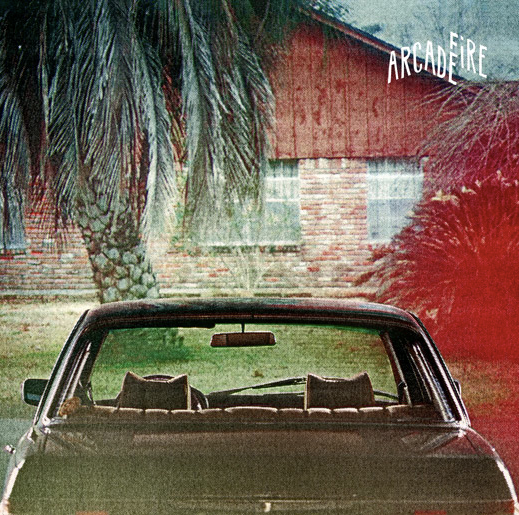
Arcade Fire- The Suburbs

Arcade Fire's Funeral was one of the essential indie rock albums of the 00s; the sort of (sub)cultural event that resonated with a lot of people, while those who found it overblown or simply didn't like it still couldn't deny its popularity and acclaim. There's something dramatic and triumphant about the album, its emotional openness and intensity. I once was moved to describe it to someone as an album where it sounds like every song is in a fight for its very life. Personally, though, I prefer Neon Bible. It's dark, troubled, and borderline bitter, but the songs are so damn good that it's easy to miss what they're about. Anyway, Arcade Fire's first two albums may come off as dense and difficult when you're reading about them, but the expert song craft ensures you take to their music right away.

Ironically, then, I've been struggling with The Suburbs, which is supposed to be their almost-whimsical pop album. It took me about three listens before I was sure I liked the album, which is strange since their first two are much heavier and darker in terms of subject matter and music. My main issue with this album is that it's too long, and this is something compounded by a handful of weak tracks. But yes, I enjoy this album. The Suburbs starts off in fine fashion with the jaunty bounce of the 70s AOR style title track, easily the mellowest and lightest start to any of their albums. Tracks like 'Month Of May' and 'Sprawl II (Mountains Beyond Mountains)' even demonstrate some musical growth, with the former a chugging rocker and the latter making the best use of Regine Chassagne's vocals on the album, setting them to a throbbing electro-pop backing which at first seems out of place with this band but quickly wins you over. When Arcade Fire are just sounding like themselves, as on 'Ready To Start and 'We Used To Wait', they still have all the power and energy that they displayed on their first two albums. I'd even go so far as to say that those two songs easily match any of the band's best.

Keep in mind that those albums were a full 15 minutes shorter than The Suburbs. Their greatness would be dulled by three or four more songs, “too much of a good thing” being this album's chief failing. I'm a firm believer in the “less is more” school, since I'd rather pay $15 for an excellent 35 minute album than a bloated, half great 70 minute one. Certainly if it was 70 minutes of fully great it would be another matter, but most of the times I've listened to The Suburbs I get tired of it about halfway through. Again, none of the songs are outright bad, but this album simply lacks the coherency and consistency that made the first two Arcade Fire albums near-perfect. Had they trimmed a few of these tracks, they could have had a totally great album and an EP's worth of pretty good material. For instance, 'Empty Room' seems unfinished, overwhelmed as it is by overloud guitars and errant white noise, while both parts of 'Half Light' could have been an excellent anchor to an EP instead of cluttering up the middle of the album. In many ways The Suburbs reminds me of that mid 90s to early 00s era when bands released albums that sprawled to hour plus lengths simply because CDs could handle more playtime than records. Even Bob Dylan succumbed to this problem: his 1997 single CD album Time Out Of Mind is actually longer than his 1966 double record album Blonde On Blonde!

While clearly the product of the same band, Arcade Fire, much like Wolf Parade, have managed to release three albums that are quite different from each other, tonally and music-wise. There doesn't seem to be a general consensus about any of their albums, either, at least according to the people I talk to.The Suburbs may only be a silver medal winner to me , but I'm sure many people will love it and either see past its flaws or not see them at all.

Monday, August 9, 2010

Okkervil River- Black Sheep Boy

It's strange and beautiful how music can affect you. Hearing the right song at the right time has made me do anything from miss the exit I was supposed to take, tell a complete stranger I think she's beautiful at a concert, or finally get up the wherewithal to shave and do some laundry during one of my depressive phases. Yet I generally find myself resistant to what Bradford Cox of Deerhunter once referred to as “emotionally manipulative” music. The sort of stuff that attempts, purposefully or otherwise, to make you feel something, whether it be despair, euphoria, anger, or what have you. For instance, I was listening to In The Aeroplane Over The Sea the other day at work, and for whatever reason the latter half of it really got to me; meanwhile, I'm dreading finally listening to the new Arcade Fire album because I find their albums draining (in a good way) due to their full force assault on my emotions.

Still, when I stumble on a band who have this kind of effect on me, it's always a welcome thing. The Stage Names was my introduction to Okkervil River, and it was one of the many excellent albums from 2007. My only foreknowledge of the band was a comment by Lou Reed at some kind of MTV awards show, where he was asked what modern bands he liked. I'm pretty sure it was around the time Black Sheep Boy came out, since this was definitely the album that made their name. Anyway, I can see Reed liking this band. There's a classicist, straight-ahead rock 'n roll feel to their music that would appeal to him. Even when they're bringing in stately horns ('A Kind And A Queen'), orchestra players ('In A Radio Song'), or going for acoustic stuff that wouldn't be out of place on a Mountain Goats album (the title track), you still feel that this band is not so much classic rock a la the Rolling Stones as they are a prefix-less version of rock. Akin to the third (and especially) fourth Velvet Underground albums, now that I think about it.

Okkervil River certainly aren't indie rock as most people would define it despite being on an indie label. Frontman Will Sheff even stated, during an interview with Relix about Pavement's reunion, that he actually hated them for awhile because of all the bands who sprung up in their wake, with lazy, sloppy music and mumbled, meaningless lyrics. Sheff, though, is the kind of guy who will put work and time into his albums. Hence Black Sheep Boy, a concept album inspired by a song of the same name by Tim Hardin. Rest assured that, whether or not you try to piece together the story of the monstrous, tragic lead character and the love triangle he becomes involved in (at least, that's what I think is going on), you can still enjoy this album. As someone who enjoyedThe Stage Names but just couldn't quite fall in love with it (I like to call this “four-and-a-half-star-syndrome”), Black Sheep Boy is concrete proof that Okkervil River are a great band. You may not dig Sheff's voice at first, but as with, say, Conor Oberst, once you see his full range and spellbinding power, you understand what a deliberate and emotionally affective weapon it is. During my first listen, when the band hit the peaks on the dramatic 'For Real', I was finally sold on his voice.

As for the album, when the band hit those final peaks on the epic 'So Come Back, I'm Waiting', and he belts out “I'm waiting/I snort and I stamp” and then quiets down for “I'm waiting, you know that I am/
calmly waiting to make you my lamb”, I was fully sold on it. The main reason I like this over The Stage Names is that there's a stronger sense of discovery and songwriting playfulness here. The mellow country-rock of 'A Song Of Our So-Called Friend' could pass for a Bonnie 'Prince' Billy cover, 'A Glow' has a waltz-like lilt and dreamy school dance guitars, and the Spoon-like grooves and falsetto backing vocals on 'The Latest Toughs' make it one of the album's most immediate thrills. This is an album brimming with ideas and hooks, with a palpable feeling of fun to back up and juxtapose with the heavy/dark subject matter and sometimes smarty-pants lyrics. Hands up, how many people had to look up what a “diapason” was?

As with a good number of things in life, Lou Reed was right about Okkervil River, too. They're one of the few indie bands that no genre or buzzwords stick to other than “rock.” Then let me say: Black Sheep Boy is an outstanding album from one of the best (extant) rock bands. Highly recommended.

5 Poorly Drawn Stars Out Of 5

Wednesday, August 4, 2010

Caribou- Andorra

2007 was a bumper crop year for music, to the point where otherwise excellent releases by bands like Do Make Say Think and Okkervil River wouldn't crack my top ten list. So it is that I'm still in the process of playing catch up on so much music from that year (not to mention the rest of the last 50ish years of music that I've missed) that something as good as Andorra escaped my notice until now. Caribou, and Dan Snaith's older work as Manitoba, has consistently been one of those artists I see showing up on “best of the year” lists, but I never seem to see copies of his music when I'm browsing through a record store. Still, Andorra won the 2008 Polaris Music Prize (though it came during one of the weakest year-ish eras for Canadian music in some time, judging by its fellow contenders) and there's something infinitely more legit about those awards than our Grammys, so let's dig in.

Andorra's aesthetic is that of 60s psych-pop meets 00s electronic music. This approach sounds like a novelty on paper, but in practice it clicks so smoothly that this music belongs to both decades equally. Not that the 60s and 00s are that out of sorts to begin with. Artists from Boards Of Canada to Fleet Foxes have offered their own unique takes on a vintage/modern mix; in fact, another 2007 release, Panda Bear's Person Pitch is very similar to Andorra in many regards. Yet where Person Pitch plays more like a hip hop, dub, or electronic album, Caribou here hews closer to a song oriented, melodic structure that nonetheless doesn't feel as self consciously retro as similar music from Stereolab.

One of the main touchstones I hear in this music is the Silver Apples. While Andorra does also owe a lot to late 60s/early 70s psych-pop and, especially, krautrock, it is not guitar based like those albums are. Instead it's based on driving, organic, jazzy rhythms and drum beats as well as futuristic keyboards and dreamy vocals. In other words, like the Silver Apples. It is an influence more than a blueprint, though 'Sandy' and the superb 'After Hours' do sound like more fleshed out takes on that cult band's first two albums. Meanwhile, 'Desiree' is one of the album's highlights, sounding like Caribou and no one else. The quiet and introspective first minute is gradually buffeted by orchestral samples that float in from the background, until the song blooms into a gorgeous chorus at 1:24, like an audio approximation of the flowers on the album cover.

'Niobe' is an appropriately lucid and elongated ending to the album, with the repeated refrain of “I fall so far” drifting in and out of the piece as either a statement of love or a resignation of what has been lost. Like all of Andorra, it has an affecting pop immediacy that makes you want to hear it again as soon as it's done, subsequently revealing new layers of sound and detail you hadn't noticed before. Andorra was without a doubt one of 2007's best albums, which is saying a lot considering its company.

5 Poorly Drawn Stars Out Of 5

Friday, July 30, 2010

Nick Cave- Nocturama

I'm a fan of “give it a decade and give it up” bands. None of them consciously go into it planning to break up by the ten year mark, if not sooner, and there are many exceptions to the rule, but think about it: ten years takes you from the very early Beatles to Let It Be; spans the best era of the Grateful Dead; accounts for the best albums from R.E.M., Led Zeppelin, The Who, Can, etc. Admittedly, you can't really say the same for solo artists, since they tend to have bumpy roads during their storied decades, rarely having consistently great discographies. My point is, bands or artists who are around long enough are bound to release a subpar or outright bad album by sheer statistics. Just look at Bob Dylan. Or Nick Cave.

No album from his vast body of work—at least the parts that I'm familiar with—strikes me as outright bad other than Nocturama. Mind you, this isn't a case of an otherwise good album following and preceding excellent releases, and suffering by comparison. 2001's No More Shall We Part is an underrated, moody album recorded after his recovery from heroin and alcohol abuse, while the double album Abattoir Blues/The Lyre of Orpheus would be a career highlight for any artist, so sustained is the quality level of songwriting and playing on those discs. No, Nocturama is just a bad album through and through: the lyrics are either insipid or cliched and the music is a confused mess of his older rambunctious style and the newer singer/songwriter stuff. If you're familiar with any of his albums from around this era, the entire album has the half-hearted feel of an uninspired artist going through the motions.

It's difficult to pin down exactly what went wrong, because someone not terribly familiar with his music, or someone not listening with a critical ear, would think that it was a passable if mostly unremarkable release. In other words, it's boring and forgettable. I suppose that is actually the most damning offense of Nocturama. For an artist like Nick Cave, whose albums are frequently among the best of the year every time he comes out with one, each having a unique feel and character all its own, it's the gravest sin to record something that is below average and has no personality to it. The slow ballad tracks, such as 'Still In Love' and 'Right Out Of Your Hand', sound like the microwaved leftovers and C-sides (yes, I meant to type C-sides) from No More Shall We Part, lacking all of its dramatic delivery, novel-like lyrical sketches, and superb arrangements. Meanwhile, the tougher tracks suffer from artificially induced energy and come off as a Nick Cave cover band playing their original material that was “inspired by” the artist they're covering. 'Bring It On' is an unimpeachably lame track by Cave's normal standards, the neutered sound of the instruments due either to non-sympathetic production or apathy. Worst of all, it's hard to believe that the man who kicked our asses with 'Stagger Lee' and 'O'Malley's Bar' could turn in pretenders-to-the-throne like 'Dead Man In My Bed' and 'Babe, I'm On Fire', the latter of which, at almost 15 minutes long, could be half that length and still feel like an eternal, overly repetitive, and ultimately failed attempt to give the album an epic and forceful finale.

To say that most of the lyrics on Nocturama are among Cave's weakest is an understatement. The slightness of 'There Is A Town' and the beaten-like-a-dead-horse obviousness of the metaphor of 'Rock Of Gibraltar' (his/their love is as strong as the titular rock, maaaan!) are all signs of an artist raiding the dregs of his notebook. To be fair, there are some good lines and imagery here and there, such as in 'She Passed By My Window' and 'He Wants You', but they're surrounded by lazy rhymes and cliched sentiments.

It all comes back to the fact that this is Cave's most generic and listless sounding album, lyrically and musically. Even people who like Nocturama, or merely think it's average, would be hard pressed to argue its merits over almost any of the rest of Nick Cave's albums. Assuming you were standing inside his discogra
phy, you could throw a rock forwards or backwards, at any distance, and hit something that is more worth your time and money thanNocturama.
2 Poorly Drawn Stars Out Of 5