Thursday, June 16, 2011

Battles- Gloss Drop

Whether or not you'll enjoy Gloss Drop hinges on two things the band has dropped from their debut: guitarist/keyboardist Tyondai Braxton (and his cut-up, looped, digitally processed vocals) and the sense of heavy metal/hard rock raw power that permeated some of their past songs. The first one is the biggest change, as losing Braxton wasn't like a band shuffling bassists; he was a unique element of their sound and their ostensible frontman. As for the second loss, Gloss Drop still manages to rock from time to time, but by and large it is a more freewheeling and fun record, picking up the sort of videogame-esque keyboards and funhouse, genre blending atmosphere of some moments on Mirrored. To put it in the nerdiest way possible, the change from the debut to now is like going from the original Terminator to the liquid metal one from Terminator 2. Gloss Drop is still muscular but more trim, like a long distance runner compared to a linebacker.

Similarly, it keeps taking on different forms to aid its attempts to kill John Connor. No, wait...that's just the liquid metal Terminator. All kidding aside, this record is guest heavy, which is both good and bad. These collaborative songs bring out different elements of Battles's sound (a la the liquid metal Terminator impersonating different humans) thereby exposing the band's ties to various genres and sub-genres. 'Ice Cream' is one of the primary reasons this is a more fun and freewheeling album than Mirrored, boasting an addictive stuttering organ melody on top of a general Summery atmosphere. It also has a surprisingly good groove considering the trio that makes up Battles are mostly known for their past associations with math rock and metal. In the most interesting pairing, Yamantaka Eye of the Boredoms stops by for the lengthy album closer 'Sundome', suggesting a possible new direction for the band as a genre straddling electronic/dub band. I would kill to see what Battles and Eye would do over the course of a collaborative EP or album; of the four guests, he ends up being the best fit as well as most appropriate choice for a dream replacement for Braxton.

To call Gloss Drop a disjointed album feels as much like a slight as it does a compliment. This is where that “guest heavy album is both good and bad” element comes into play. The guests pull the band in different directions and it always sounds more like Battles backing someone instead of them guesting on a Battles track. This causes Gloss Drop to lose the coherency of Mirrored, which, again, is good and bad, since this album is more accessible, grooving, and fun to listen to. Moreover, it's true that what exactly this band is and what they will sound like from release to release has been constantly in flux from the very beginning, so it's a bit unfair to say the guests are causing this. If the band seem less overtly experimental on Gloss Drop, it's only because the songs are more focused and traditional (or what passes for more traditional for this band, anyway), more like the tangible results of completed experiments rather than unedited improvisations or works in progress. Where on their EPs a dissonant, heavily electronic song like 'Rolls Bayce' might have gone on for three or four minutes, here we get by fine with a mere two. Still, the most successful experiments do end up being the collaborations; the songs without vocals invariably feel like pretty good b-sides or even above average Mirrored sequels, in particular 'White Electric.'

Gloss Drop ends up leaving the band's future even more wide open than it already was. This means that it lacks the unified feel and flow of their debut, but the tradeoff is that Gloss Drop is even more of a joy to listen to. This is the kind of album where you can just tell the band had a great time making it, and the guests help lend it a party atmosphere. This doesn't make it a better record, and in a few years time it will either make more or less sense depending on where the band goes next, assuming they ever settle on a direction or two. And you know, I'm not sure it's what they should do to begin with. At any rate, Gloss Drop is not so much a transitional album as one that sees Battles tinkering with their chemical formula before it's even been jotted down, as if a scientist kept adding more and more compounds to the mixture and calling in colleagues for their input. This results in a record that is a hell of a lot of fun to listen to even if it doesn't, as a whole, add up to truly stellar music.

4 Poorly Drawn Stars Out Of 5

Friday, June 10, 2011

Wilco- A.M.

If I may: upon its release, Wilco's A.M. got an undue amount of grief and bad mouthing from every side imaginable. Even members of the band, in particular Jeff Tweedy, regard the album as a failure, inspiring him to craft the massively ambitious follow-up, the double album Being There.

While that may be the only silver lining of this record for most people, I have the strong impression that if anyone bothered to listen to the thing today, with all the alt.country/No Depression/rivalry with Jay Farrar's Son Volt in the distant past, they'd discover a decent little album with some fantastic songs. After all, Wilco often bust out fan favorites 'Casino Queen', 'Box Full Of Letters', and 'Passenger Side' as crowd pleasing stompers during their shows. If three great songs don't exactly a great album make, they do help make it a good one. In other words, A.M. is, depending on your familiarity, not as bad as you remember or not as bad as you've been led to believe.

I would add 'Too Far Apart' to that list of great songs from this album. As this is the only Wilco release on which Brian Henneman appears, his lead guitar playing on this track makes it among the most unique in the Wilco canon for that reason alone, though the mid-60s Dylan-esque organ stabs and ramshackle drumming help make this my pick for most underrated, unknown Wilco song. It's simply a rocking little album closer, unassuming and casual, the sort of thing critics and disappointed music fans probably derided the album as being boring or underwhelming for. Which means to me, it's populist and fun, hard to hate but also difficult to praise or critique in a meaningful way.

Yes, what strikes me most about A.M. is its populist appeal. Not so much alt.country as a country-rock record patterned in the rustic-by-way-of-folk-and-rock Bob Dylan/Neil Young style, the album title is also a dead giveaway for the band's aim, making music that would feel welcome next to, say, The Band on a classic rock station. Sure, there's some twang to tracks like the modest 'That's Not The Issue', the record's undiscovered treasure (next to 'Too Far Apart', anyway), featuring some spirited banjo picking and pedal steel guitar licks. Sure, nothing on here hints at the stronger rock, pop, and later, experimental elements that were to come, to say nothing of the forthcoming greater artistic ambition. Yet listen to this in the context of the band's discography as it stands in 2011 and you'll find that, as a whole, A.M. is closer in sound and spirit to Being There than Being There is to Summerteeth and everything after.

This may sound strange, especially coming from someone who generally loathes brainless, feel-good pop music, but even I enjoy modest, good-time music now and again. And A.M. is just that; nothing more, nothing less. Not every song is great or an amazing piece of art but with an album like this, it's unnecessary. Furthermore, it's ironically almost an asset that some of the songs are mediocre because, at a party (the ideal place for such music), it's nice to have a break to get up and grab another beer or greet those lackadaisical friends showing up fashionably late.

All of that said, A.M. is without a doubt Wilco's worst album. Being There is a more artistic and enduring rejiggering of its aesthetic minus the boozy fun-time country-rock swing, as if Tweedy was finally putting in a genuine effort to try. By which I mean, not only to try to best former Uncle Tupelo bandmate Jay Farrar but also to carve his name on the tree of rock history. Whatever record you think he managed to complete both of those with--I wasn't totally sold until A Ghost Is Born, which probably sounds insane--I don't think anyone would claim he did it with the debut. Still, calling A.M. Wilco's worst album is analogous to calling Grizzly Bear's Horn Of Plenty their worst, too. Both are true statements, though those debuts are quite different in spirit and tone from what they would go on to do, to say nothing of personnel changes. Thus I would append the claim to be a variation on the sophomore slump rather than "worst album." So, no, those albums aren't the worst; they're the "freshmen slump" of both bands.

3 Poorly Drawn Stars Out Of 5

Thursday, June 9, 2011

Dinosaur Jr.- Farm

For all the comparisons to Neil Young that they've endured over the years, for all the influence they had on the British shoegazer scene of the late 80s/early 90s, the most intriguing thing to me about Dinosaur Jr. is the fact that they've gotten away with being what is essentially a power trio in an underground/indie scene which normally turns its nose up at such things. Really, especially after watching the Live In The Middle East concert film, I think of this band as the Cream of the 80s. It's not a perfect analogy, I admit, yet it's not hard to see the same clash of egos and resentment between bassist and guitarist in both bands.

Of course there's also the music. While Dinosaur Jr. don't sound much like Cream, give a listen to Farm and tell me that I'm wrong in considering them a power trio. The riffs are heavy and memorable, full of fist pumping abandon bested only by J. Mascis's searing, endlessly enjoyable soloing. Though the rhythm section lacks his virtuosity, they are every bit as solid as classic rock benchmarks like Led Zeppelin. Since bassist Lou Barlow spent his time away (from the mid-80s until 2005, when the original Dinosaur Jr. line-up reunited) making music in various bands, he now has the confidence and outside creative outlets to be a perfect foil to Mascis, delivering a couple great tunes per record and playing with creativity and energy. This is, ultimately, Mascis's band, but Barlow and drummer Murph are no longer just along for the ride, doing and playing what they're told to. Now it feels more like a "lesser but equal" situation.

Farm was Dinosaur Jr.'s second album after the reunion, and you get the impression throughout that the band have jumped on the opportunity to rewrite history. It's not hard to imagine this record coming out in some, say, alternate history 1999 where Barlow had stayed in the band through the 80s and 90s. In fact, Barlow's contributions to Farm sound eerily similar to Sebadoh's 1999 album The Sebadoh, down to the punchy, live-sounding production and all. But I digress.

With the pressure of their reunion tour and 'first album back' behind them, there's a real energy to this record which belies the band's enthusiasm for recording and playing music together. While they may have stretched out on stage back in the 80s, Farm feels like the most live and jammy of all of their albums, underscoring and highlighting how power trio-y they are. It's telling that this is the band's longest album ever, doubly so because most of the shortest songs were relegated to the bonus tracks included on the deluxe edition. 'Plans', 'Said The People', and 'I Don't Wanna Go There' all sprawl past the six minute mark, the latter in particular, featuring a soaring guitar solo that seems to last for half of the nearly nine minute runtime.

That sprawl and lack of concision to Farm as a whole means that this isn't the masterstroke it could have been if this were a more song oriented versus performance based record. The songs aren't all fantastic though the music is exceptionally good, if that makes sense. Such a situation cuts both ways, since this is the kind of music which makes you want to listen to it and it alone for the rest of the day. Farm doesn't supplant You're Living All Over Me as the band's high water mark...though you may be surprised how often you end up listening to it.

4 Poorly Drawn Stars Out Of 5

Sunday, June 5, 2011

Essay: Personal Reflections On Let The Blind Lead Those Who See But Cannot Feel


Once you reach a certain age and are unmarried, I'm willing to bet that, like me, you have that one person for whom you will eternally pine. They understand you, and more importantly, they accept and love you for who you are whereas no one else can or does. To paraphrase Department of Eagles, no one does it like them. Yet for any number of reasons, things between you both never work out. Perhaps they only see you as a friend. Maybe one or both of you are too fucked up to make things work. Or maybe it's a simple case of them having someone else and not needing you. Whatever it is, your friends and family tell you to stay away, that you'll only receive pain and torment, that you've been down this road before, etc. However, that simple sense of commonality and understanding is so potent a draw you would cut off an ear, Picasso-style, if it would make them love you (or love you again).


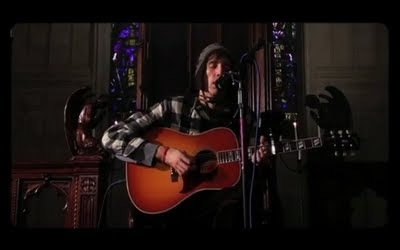
A girl, no, a woman I love very much fits in this category. I could never explain how I feel about her in any rational way. Moreover, it's a distinct possibility that I will never be with her in a traditional relationship sense, and we'll come in and out of each other's lives like ships passing in the night. We don't even live in the same State anymore. The point I'm getting at is that I didn't even understand how much Atlas Sound's Let The Blind Lead Those Who See But Cannot Feel meant to me until I introduced her to his music via Pitchfork.TV's mesmerizing live performance of his at a church for their Cemetery Gates series. I was simultaneously introducing her and re-introducing myself to this incredible music. We both became briefly obsessed with the performance, and by extension, his two albums. I never would or could have finally connected with this record if not for her, and I am eternally grateful to both the music and her for it.

To me, Bradford Cox's music in Deerhunter and Atlas Sound is completely tied up in the tension between nostalgia and the present, between accepting one's own weirdness and trying to fit into society, and between concrete emotions and a numbed, druggy indifference. Let The Blind... goes a step further by bringing in his own experiences, in particular his unrequited love for friend/Deerhunter member Locke Pundt and his troubled youth--parental divorce, drug use and abuse, and most importantly for me, his teenage surgeries and hospitalizations for Marfan's Syndrome.

Careful viewers of the Weekly Whiskey video series may have noticed a line-like scar running along the left side of my head. I won't bore you with the details as to its origins; suffice it to say that I had three or four surgeries by the time I was in kindergarten. Those experiences, along with all the feelings and thoughts a child has while facing such things, have shaped me as a person ever since. I'm willing to speculate that Cox would agree that it's not the physical scars I bear, or his emaciated, sickly appearance thanks to Marfan's, which really have the profound, lasting effect on us. Instead, it's all the associated mental and emotional baggage that comes from them and from the reactions of others.


Strange, then, that the first few times I listened to this record, it struck me as numb and detached. It still sometimes strikes me as the kind of music someone who was perpetually stoned (on weed and/or psychedelics and/or prescription meds for insomnia and anxiety) to the point of indifference would make in an attempt to reconnect with their feelings. This was all on the surface, though. Listen carefully to Let The Blind... and his other music in and out of Atlas Sound, and you'll find one of the most self-aware and emotionally connected musicians of our time. Just as Dinosaur Jr. rock harder than almost anyone yet often have nakedly-emotional/personal songs underneath all the blare and distortion, on this album Cox swaddles his feelings in seemingly cold/distant music. The more I listen to this record and the more I decipher the lyrics, though, the more warm and comforting it becomes. Just as the woman I spoke of earlier is one of the handful of people I've ever met who truly understands and accepts me, this is one of the few albums I feel a strong personal connection to. I don't mean this in the broad sense of "wow, I relate to Beatles songs", which play to many people in many vastly different situations. It's much more specific for me and this record. For example, though my own experience with 'sleeping til I threw up' wasn't drug related as on the song 'Ativan', the first time I heard that line goosebumps and tingling shot up my limbs and spine and the memory came roaring back.


What Let The Blind... represents to me is making something creative, positive, and therapeutic out of an abjectly terrible period of one's life. You can get so hung up on your own perceived issues and memories that you don't attempt to do anything about them, to make peace with them and yourself. I'm sure that making music hasn't "cured" Cox, but if it has helped him half as much as Let The Blind... and other albums have helped me, and writing in general has also helped me, perhaps a cure isn't the answer. He and I don't need to force ourselves to become normal people; we have to learn to express ourselves and be OK with who/what we are.

This is an album of purging personal demons, of displaying the most vulnerable and pained memories and pieces of one's self to the world. Most important of all, it's about being unafraid to do so anymore. I would never and could never review this music in any traditional sense because, in some other lifetime and series of events, I might've made this album.

NOTE: I apologize if it seems like I'm attempting to parallel myself and my life to Bradford Cox too much. I don't know him at all except through his music, interviews, and random blog posts I've read. I'm making a lot of assumptions in this essay and I acknowledge that. I'm sure my experiences were not much like his at all, and his were likely far worse, so take it all with a grain of salt.