Showing posts with label Essay. Show all posts

Tuesday, March 17, 2020

Is Your Nostalgia Wrong?


I was watching a video on YouTube recently in which someone visits the last Blockbuster located in Bend, Oregon. This nostalgia overdose left me with oddly mixed emotions. As a card carrying 90s kid, I should have been glowing with joy as I did when Ecto Cooler was briefly brought back in 2016. You rarely, if ever, get to relive the past in such a genuine way—after all, Ecto Cooler wasn't just the same flavor under a different name and lacking the Ghostbusters branding; it was the real deal. Similarly, the last Blockbuster revels in its retro-ness, right down to letting you buy merchandise such as Blockbuster cards and fannypacks. However I think it's become clear that as nostalgia has become more and more of a mainstream phenomenon, sometimes people get lost in their memories and can't step back enough to separate the good nostalgia from the bad. Perhaps I should say, to evaluate whether the thing they're pining for is the thing itself or their fuzzy memories of the thing itself. Ecto Cooler still tasted great decades later, but does going to a video store really hold up?


First, though, let's talk about Blockbuster as a company. They deserved to go out of business and we all seem to have forgotten this in the wave of post-Captain Marvel 90s worship. Remember how Blockbuster passed on buying Netflix because they couldn't see where technology was heading? Remember how Blockbuster, at their height, were one of those pseudo-monopolies that edged out mom-and-pop video rental stores? Let's also think about how their strategy was to overwhelmingly focus on new releases and the most popular movies, so that their selection was always very limited and tailored to mainstream tastes, thus eliminating the ability to explore the history of film and the variety it offers.

Now, let's talk about the movie rental experience. Have we all forgotten and taken for granted how superior the online streaming model is? Have we all forgotten going to Blockbuster and they either didn't have the movie you wanted to see or they were out of copies to rent? Only 90s kids remember how rad limited availability was, bro! s clearly superior to pay like $5 to rent one movie for a couple days instead of paying like $15 a month for unlimited access to hundreds of TV shows and movies. In all seriousness, even with Netflix's increasingly sparse selection compared to its height in the early 2010s, it's still a much better value than Blockbuster or other video rental stores could ever match. In the aforementioned YouTube video, they didn't even like the movie they rented, so that's $5 wasted. Sure there's a lot of garbage on Netflix, too, but you're not paying $5 a pop to try your luck on crap like Tall Girl or Zumbo's Just Desserts.

All of this brings me to the important point I want to make about nostalgia: ask yourself if you really miss the thing in and of itself. Do you really miss going to a physical location to rent a movie, or do you miss the warm safety of childhood that surrounded this experience? I, personally, used to have a huge amount of nostalgia for the NES and its games, yet with a handful of exceptions, all of those games have aged poorly and are frustrating, badly designed, time wasting pieces of shit. By and large when it comes to my nostalgia for the NES, its really longing to relive my childhood, the experience of discovering what videogames were for the first time. Sometimes I long to return to Phantasy Star Online on the Dreamcast because of what a new and revolutionary experience it was, yet if I think about the game itself I'd much rather play something that isn't so clunky, slow, and grindy. All of this said, obviously I do miss certain games because they do hold up today and are still great experiences, such as Chrono Trigger or Streets Of Rage 2. They're nostalgic and actually worth being nostalgic about.

Blockbuster? Not so much. True, I prefer books over reading on computers/phones/tablets, and I prefer vinyl records over digital music...but I do utilize all of these things to some extent. They aren't either/or propositions; they complement each other and offer unique upsides and downsides. This isn't so with going to Blockbuster vs. streaming online. Other than physically seeing the boxes, there is no upside to videostores, and actually you can do this at Best Buy or used game/video stores, so...what's the point, other than misplaced nostalgia? While I will concede that not every movie/TV show is available online, somewhere, to stream, the vast majority of them are available, even if it's video on demand or buying the physical release on Amazon. True there is the immediacy argument, that you can go to a video store and have it in your hands right then and there, but this is also assuming they carry the title(s) you want and that they have copies available.


The point of all of this isn't to rain cynicism down on someone else's nostalgia parade. People are allowed to be nostalgic for whatever they want, and maybe some people do have genuine love for Blockbuster, for whatever reason. I just think that sometimes we allow nostalgia to blind us to the obvious faults in things from the past, as if everything that doesn't exist anymore somehow automatically transubstantiates into a valued brand or item. What's next, will people be nostalgic for Best Buy when that great lumbering beast finally goes belly-up in the murky waters of modern retail? People are dumb, so probably, yeah.

Saturday, October 1, 2011

Essay: Only A Fan Could Love Quebec


Like many similar bands from the “alternative” era, (like, say, Primus), Ween were a really weird band in the early 90s who didn't fit in with grunge or alternative rock. They still benefitted from the willingness of major labels during that time to sign any band they perceived as being alternative and with a chance of having a hit song. Ween's brush with the mainstream came from their single 'Push th' Little Daisies' though celebrity fans like South Park creators Matt Stone and Trey Parker certainly helped.

Ween's time on a major label (Elektra) saw the band, much like They Might Be Giants, moving away from their acerbically strange, 4-track, just-the-two-of-us-playing-everything-and-using-cheap-equipment aesthetic into music that, while still odd and far away from their labelmates, became more polished and professional sounding. Concurrently, Ween pushed their gift for genre experiments as far as it could go, putting out an album of legit country music, 12 Golden Country Greats, and a (loosely) nautical themed homage to the progressive rock they grew up on, The Mollusk. This all culminated with White Pepper in 2000, a succinct record of accessible tunes and some classic rock nods. Ween left Elektra shortly after its release, supposedly due to the label putting out the Paintin' The Town Brown: Ween Live 1990-1998 release, which they had intended for their then-new Chocodog label.

Back on their own, so to speak, Ween seem to have been inspired to return to their roots. This is mainly apparent in the Shinola, Vol. 1 collection, which gathered together outtakes from the band's past. However, the band also went back to their earlier sound for their next album of new material, 2003's Quebec, an album only a fan could love. It's certainly possible that you could lay it on someone who didn't know a thing about Ween and they might 'get' it, or even like it, but the combination of weird lyrics and concepts with weird music means the average listener will wonder what the hell they're listening to. To be fair, Quebec is more akin to White Pepper than Pod, sonically speaking, yet it's still got enough outright bizarre songs and such a variety of styles that it's among the band's most varied and demanding albums.

“Demanding” is indeed a good way to put it because, with 15 tracks in 55 minutes, Quebec never stops throwing curveballs at you. Ween produce some of their best genre experiments here, whether it's the jam band twangy groove of 'Chocolate Town', the Pink Floyd nod 'Captain', or the dreamy psychedelia of 'Alcan Road.' More importantly, there's also Ween following their impulse for off-the-wall pastiches ('Zoloft' sounds like lounge music married to easy listening pop music filtered through, well, drugs) or indescribable oddities with primitive sounding instrumentation, like the drum machine grind of 'So Many People In The Neighborhood' or the fake-out endings of the instrumental 'The Fucked Jam.' Somehow it manages to hold together as a cohesive record and not a slapdash collection of disparate tracks.

Quebec may not qualify as the band's best album; it certainly doesn't qualify as their weirdest. Nevertheless, it's the sort of record only a fan could love: only someone intimately familiar with Ween's discography could make much sense out of this sprawling, diverse, and seemingly random record.

Friday, June 24, 2011

Essay: Low In The 00's Pt. 3

This is the final entry in an essay series on Low's albums from Trust to Drums and Guns. Look for a review of their new record, C'mon, sometime this weekend.


Drums and Guns

When a Low album starts off by proclaiming that soldiers, babies, poets, liars, and pretty people “are all gunna die”, you begin to wonder if some mistake has been made somewhere. Surely this must be another of Alan Sparhawk's sideprojects...? But, no, the cover clearly says Low on it. “Well, that was a strange opener, let's see how the next one goes,” you mutter to yourself.

Soon: “...what the hell is with all these loops? Where are the guitars and Mimi Parker's stark drumming? Boy, this is a weird one.”

As alluded to in the last essay, Drums and Guns is a very different sounding record from what Low had done before, even on the former big departure The Great Destroyer. Excepting 'Shots & Ladders' from Trust, some obscure split singles/collaborations, a remix records, and the underrated Songs For A Dead Pilot EP, Low had never explored this sort of musical territory before, doubly so on a main album. If The Great Destroyer could be accurately-but-lazily described as Low's rock album, then Drums and Guns could similarly be labelled their electronic album. Really, the nearest comparison I can think of is the sound of the more experimental/electronic/minimalist tracks from Radiohead's Kid A and Amnesiac. 'Take Your Time' is practically a Radiohead cover, so closely does the piano and tense atmosphere recall that band.

Whether Drum and Guns was a reaction to the second Gulf War (doubtful, since it was a couple years too late to be relevant) or the reception to The Great Destroyer (methinks no; they don't seem like the kind of band to do what they think people will like), Low were moved to craft songs which ooze along on currents of discrete loops, fractured guitar textures, and barely-there drumming. This record's closest kin is found in the less industrial and intense moments from Scott Walker's Tilt and The Drift, the parts where he sounds like he's brooding alone in abandoned cathedrals or muttering eulogies for civilization while the last television and computer screens in some kind of futuristic urban wasteland are flickering toward death, displaying only static or random colors. What I mean is, it may sound like Radiohead circa Kid A, but it feels more lime Scott Walker's recent work.

At the same time, the lyrics tend toward a more outward looking posture than I'm aware Low have had before or since. Even mid-album trifle 'The Hatchet', which helps relieve the tension of the rest of the album and calls back to the funner moments from The Great Destroyer, ostensibly is aimed at some other unnamed band. At any rate, without a doubt a theme of violence runs throughout the record; after all, underneath the olive branch of 'The Hatchet' is the copycat charge that the unnamed band's records “sound a lot like mine.” The brief 'Your Poison' could pass for a 60s political folk song, directly addressing the listener with the old fashioned terminology “good people.” And 'Murderer', if taken at face value, reads like a disturbing prayer from a fanatical/fundamentalist Christian, ready to give back violence in some kind of retribution or revenge against perceived worthy-of-punishment evil in the world.

Drums and Guns is the kind of record which sounds completely original and like a bolt-out-of-the-blue unless you are intimately familiar with the band it comes from and/or the album's influences. Even with reference points like modern day Scott Walker and '00-era Radiohead, though, this music is the most conceptually interesting and accomplished of Low's releases from the last decade. I would still waffle between this and Things We Lost In The Fire as best record from this time frame, but Drums and Guns is much more ambitious without its reach ever exceeding its grasp. If we can posit The Great Destroyer as a kind of shattering of any preconceived notions about who Low are and what kind of music they can make, then Drums and Guns is the sound of the aftermath, fragmented shards of sound that don't qualify as rock or 'slowcore.'

While this is certainly a dark and sometimes disturbing album ('Violent Past' alludes to some kind of strangulation taking place), it still manages to avoid the morose, melancholy, and leaden feel of Low's early music. This is partially thanks to Drums and Guns being the bands shortest album, though mostly it's thanks to the way the band never lets a song drag on too long or have too skeletal of a structure. How much of the indistinct sounds and loops which fill up the background are due to Dave Fridmann is hard to say, though I would imagine he had to have some input, since Drums and Guns sounds very little like the overdriven, raucous The Great Destroyer. In fact, despite the lyrics and droning, distorted organ, 'Violent Past' makes for an uplifting, optimistic sounding album closer.

This sense of optimism, along with a more immediate and melodic aesthetic, would serve the band well, after a four year break, on their 2011 release, C'mon. But that is something I'll be tackling in a forthcoming review...

Monday, June 20, 2011

Essay: Low In The 00's Pt. 2

This is the second in an essay series on Low's albums from Trust to Drums and Guns. I'll be posting the final entry on the latter in a few days, and soon after, a review of the band's new album, C'mon. But for today, we look at...

The Great Destroyer


During the three year break from Trust to The Great Destroyer, Low changed record labels, signing on with indie powerhouse Sub Pop as well as putting out the vault clearing b-sides and rarities collection A Lifetime Of Temporary Relief. In 2003 there were rumors about longtime bassist Zak Sally leaving the band, which he eventually did in October of 2005. So, if it could be argued that Low had half-heartedly made some changes on Trust, this new era saw them making good on those unstated promises/threats. Whether or not you view Trust as the start of this new era or a sort of unintentional send-off to their old sound, something fundamental about Low's approach needed to change for them to continue as vital artists instead of becoming the kind of band only diehard fans could love, consistent but never surprising. At a certain point a band has to justify their continued existence with something, well, new and different, otherwise they're just punching a clock and creating art not out of inspiration but out of habit. Or to pay the bills.

Judging by the mixed reception the sudden changes of The Great Destroyer received, it's clear that some were unwilling to enjoy the music on its own merits, lashing out in particular at new producer Dave Fridmann. Bringing him in was just the cherry on top of the drastic differences the band had made; The Great Destroyer could correctly but lazily be considered their rock album. At any rate, Fridmann can be an easy target for derision because he has a profound effect on the bands he works with. His distinctive style, generally lush and often weird/experimental, as well as with a super-loud/distorted production, works well on most of his projects. It also means that he becomes a de-facto new member when he mans the boards for a band. This works extremely well when established groups need a new direction. Sleater-Kinney's The Woods and The Flaming Lips's Embryonic would be lesser records without him. When he works with bands who don't need such tinkering or aren't sympathetic to his style, however, the results are often terrible. To be fair to him, it's just as much the fault of bands like Clap Your Hands Say Yeah! and Tapes 'N Tapes for coming to the studio with mediocre songs which no amount of production magic could salvage. Still, I think it's undeniable that the whole “it always sounds like someone is playing it through a guitar amplifier with overdrive and gain cranked up” aspect of those albums doesn't help.

As it turned out, The Great Destroyer is a more successful attempt to both progress and remake the band's sound than the preceding Trust, thanks partially to Fridmann's production. The slow and quiet moments still have the magical intimacy which inspired the trend of fans sitting down during Low concerts. On this record, though, they're the pleasant valleys between the brighter, more direct, and more energetic songs and sections of songs. 'Just Stand Back' is a huge departure for Low, effectively sounding like they've become a different band (and they had), all jangly guitar-pop with a much meatier backbone to all the instruments. Speaking of, it finally sounds like Mimi Parker discovered the joy of using a full drum kit more often, something immediately apparent on album opener 'Monkey', her pounding tom-toms ushered in by an ominous synthesizer and acoustic guitar strums.

'On The Edge Of' demonstrates one of the fundamental misunderstandings most people still have about Low, which is that they're only humorless, sexless aesthetes who play slow, quiet, boring music. Well, they do have a sense of humor—how else to explain their genuine love for the Misfits, down to performing some Misfits covers while dressed as the band, putting some of the results as hidden tracks on the A Lifetime Of Temporary Relief box set? Anyway, the hard rocking guitar and drums of this track speak to both the band's classic rock love as well as Sparhawk's numerous obscure side projects, including the bluesy Black Eyed Snakes and Retribution Gospel Choir, whose 2008 album sounds a lot like the kind of alternative-rock-with-a-capital-R which Low stood in defiance of, if not opposition to, during the 90s and early 00s. Moreover, one of The Great Destroyer's best and most memorable moments is the raucous, transformative peak of 'When I Go Deaf.' The band absolutely live up to the album title here by toying with our expectations until the guitar suddenly roars to life after nearly three minutes of acoustic navel-gazing , thereby silencing any doubts as to whether they could effectively subvert their old style.

As for the sexless part? Not all eroticism is physical; the way Parker and Sparhawk's vocals blend together has the familiarity and lack of self-awareness that only intimate lovers or very dear friends can have. But I digress.

Elsewhere on The Great Destroyer, things don't always go so smoothly. 'Step' is a poor attempt to throw in far too many ideas at once, including a sludgy, distorted guitar, buzzing amplifiers, affected vocals during the intro which sound like they come from a bad dance remix, handclaps, distant twinkling piano, and a boringly obvious acoustic and electric guitar breakdown at the end. 'Broadway (So Many People)' has a melody reminiscent of 'Like A Forest', surrounding it with hushed sections that sound like Parker and Sparhawk are singing inside a giant, echoey cathedral. However the actual result ends up being more like a live version of the song, as the band seem to be heading for a fade out but then kick it back in and continue on for two more minutes of formless vocal ahh's and distracting white noise that nearly swallows up the drums and chunky rhythm guitar. Strangest of all is 'Death Of A Salesman', a self-aware acoustic ditty which seems to have wandered in from another album entirely or escaped its more appropriate fate as a b-side. Then there's 'Pissing', which starts out sounding like an old style Low epic, the cymbals, guitar, and vocals building and building toward some peak until it's all sabotaged by out-of-nowhere distortion that makes the guitar howl and feedback. Then the expected peak never arrives. 'Pissing' is all tension and no release, ending abruptly, and is among the handful of missteps on this album that can't be blamed on the production. These don't ruin the record in the least but they do keep it from being the new-and-different Low's first unqualified success.

The Great Destroyer was a revitalized statement of intent for the band even if, in retrospect, it didn't establish what they would sound like for the rest of their career. That said, it did prove Low could still make great music without relying on their old bag of tricks. It may not rank among their best work, though it is arguably their most important release, the point on which their entire discography turns. Like Radiohead's Kid A, it's an essential listen even if you don't end up enjoying it. “Essential” for the band to make so they could redefine themselves and continue on as a still-vital creative entity. But also “essential” as listening for those who wish to understand what the band is about, to smash through some assumptions, and to uncover how they got from Secret Name to C'mon. In that respect, it's still a transitional work, as Trust was, though The Great Destroyer didn't point to the future as much as it hit the reset button to lay the future wide open.

Possessing just as many tracks as but thankfully 12 minutes leaner than Trust, the more I listen to The Great Destroyer the more it strikes me as being a better version of what I think the band secretly wanted to do with that one. I'd go so far as to say that the much touted rock of 'Canada' sounds restrained once you've heard this record. Whether it took more time, a new label, or a different producer, it is their most rocking album and, until C'mon, passed for their most immediately engaging. Much as credit or blame for this was laid at the feet of Dave Fridmann or their jump to one of the biggest indie labels, I'm not sure they deserve much of it. After only two years off and a new bassist, Low would return with the same producer on the same label though with the very different sounding Drums and Guns.

Sunday, June 19, 2011

Essay: Low In The 00's Pt. 1

Intro

Having perfected their style with 1999's Secret Name and 2001's Things We Lost In The Fire, it was only natural that the band would try new things in the ensuing decade. Their new album, C'mon, is their most extreme change yet in the sense that it mostly overturns their established aesthetic, savoring the fun of making and listening to inviting, melodic, and sunny tunes. But how did they get there from the well-worn cliché of them as a navel gazing minimalist band who all but defined the slowcore subgenre?

Well, I haven't kept up with Low since 2001, so C'mon came as something of a shock. Even so, examining the three albums I had missed out on has been something I've meant to get around to since starting this blog. In a three part series of essays, I'll be digging into each record one at a time; don't consider any of these reviews in the traditional sense. Rather, I want to take the long view, so to speak, and examine them in the context of the band's history as well as the present.


Trust

Low is a consistent band when it comes to putting out records. In fact, it's usually the three year fallows between releases where the major changes take place. The gap between The Curtain Hits The Cast and Secret Name saw the band moving from a pseudo-major label to indie stalwart Kranky, as well as working with sympathetic producer Steve Albini, a man well known for stripped down sounds and raw/live sounding records. He and the more appropriate home at Kranky allowed them to perfect their sound without having a major label breathing down their necks.

As Trust, however, only trailed Things We Lost In The Fire by a year, the most major change is in using producer Tchad Blake, who has an annoying-to-spell first name. Furthermore, he's worked with such a wide variety of artists it's impossible to pin a certain style on him. Unlike Albini or the forthcoming work with Dave Fridmann, then, most of the credit or blame for Trust lays with Low.

This is a classic transitional album with all the problems these kind of records usually have. It's their longest and most expansive work to date, keeping one foot in the older sound while sometimes noticeably nudging themselves to take new steps forward. 'Canada' is the clearest example of what I'm getting at, practically leaping out of the speakers with a fuzzed out bass and the most overt rock song they'd done up to this point. But changes are also demonstrated by the subtle banjo and (what sounds like a) buried horn section on 'In The Drugs'; the incredibly pretty piano solo showcase for Mimi Parker on 'Point Of Disgust'; and the suspended animation drones of 'Shots & Ladders.' This song serves as a kind of blueprint for Drums and Guns, but we'll get to that later.

With four songs over seven minutes long each, Low are no longer celebrating a different approach to making music, with minimalism and spaciousness as the key guiding principles, as they did at their best on past records. Now they're just taking too long to get anywhere. 'John Prine' is the worst offender here. It's not even that it's a bad song; its crime is being way too long and possessing an unsympathetic structure, drowning what could have been a quaint two minute song in the murky depths of their old approach where they would painstakingly build tension or atmosphere over the course of four or five minutes. During the entire course of the album there is also the issue of Mimi Parker's drumming, which is similarly unsympathetic to the arrangements. Playing while standing up with a crash cymbal and snare is brilliant for past masterpieces like 'Two-Step' and 'Closer' but for a beefier song like 'Canada' it comes off as thin and weak, as if she was laying down the click track and they never went back to overdub the real drum parts.

Trust is weighed down by its ties to the band's past. The album title and cover art, to say nothing of the themes of the lyrics, suggest a record about strained personal relationships, though as fans we could also interpret it as the album's defense statement. The band had to know they were trying to get somewhere but hadn't fully made the change, falling back on old tricks to pad out the runtime, as if to say, “not all this new stuff is great, but there's still plenty of the old stuff to help ease you in!”

To these ears, though, it doesn't work. The band must have realized this, too. It's very telling that the music they would go on to make over the next nine years sounds very little like Trust or their past at all.

Sunday, June 5, 2011

Essay: Personal Reflections On Let The Blind Lead Those Who See But Cannot Feel


Once you reach a certain age and are unmarried, I'm willing to bet that, like me, you have that one person for whom you will eternally pine. They understand you, and more importantly, they accept and love you for who you are whereas no one else can or does. To paraphrase Department of Eagles, no one does it like them. Yet for any number of reasons, things between you both never work out. Perhaps they only see you as a friend. Maybe one or both of you are too fucked up to make things work. Or maybe it's a simple case of them having someone else and not needing you. Whatever it is, your friends and family tell you to stay away, that you'll only receive pain and torment, that you've been down this road before, etc. However, that simple sense of commonality and understanding is so potent a draw you would cut off an ear, Picasso-style, if it would make them love you (or love you again).


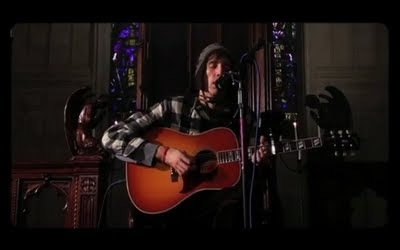
A girl, no, a woman I love very much fits in this category. I could never explain how I feel about her in any rational way. Moreover, it's a distinct possibility that I will never be with her in a traditional relationship sense, and we'll come in and out of each other's lives like ships passing in the night. We don't even live in the same State anymore. The point I'm getting at is that I didn't even understand how much Atlas Sound's Let The Blind Lead Those Who See But Cannot Feel meant to me until I introduced her to his music via Pitchfork.TV's mesmerizing live performance of his at a church for their Cemetery Gates series. I was simultaneously introducing her and re-introducing myself to this incredible music. We both became briefly obsessed with the performance, and by extension, his two albums. I never would or could have finally connected with this record if not for her, and I am eternally grateful to both the music and her for it.

To me, Bradford Cox's music in Deerhunter and Atlas Sound is completely tied up in the tension between nostalgia and the present, between accepting one's own weirdness and trying to fit into society, and between concrete emotions and a numbed, druggy indifference. Let The Blind... goes a step further by bringing in his own experiences, in particular his unrequited love for friend/Deerhunter member Locke Pundt and his troubled youth--parental divorce, drug use and abuse, and most importantly for me, his teenage surgeries and hospitalizations for Marfan's Syndrome.

Careful viewers of the Weekly Whiskey video series may have noticed a line-like scar running along the left side of my head. I won't bore you with the details as to its origins; suffice it to say that I had three or four surgeries by the time I was in kindergarten. Those experiences, along with all the feelings and thoughts a child has while facing such things, have shaped me as a person ever since. I'm willing to speculate that Cox would agree that it's not the physical scars I bear, or his emaciated, sickly appearance thanks to Marfan's, which really have the profound, lasting effect on us. Instead, it's all the associated mental and emotional baggage that comes from them and from the reactions of others.


Strange, then, that the first few times I listened to this record, it struck me as numb and detached. It still sometimes strikes me as the kind of music someone who was perpetually stoned (on weed and/or psychedelics and/or prescription meds for insomnia and anxiety) to the point of indifference would make in an attempt to reconnect with their feelings. This was all on the surface, though. Listen carefully to Let The Blind... and his other music in and out of Atlas Sound, and you'll find one of the most self-aware and emotionally connected musicians of our time. Just as Dinosaur Jr. rock harder than almost anyone yet often have nakedly-emotional/personal songs underneath all the blare and distortion, on this album Cox swaddles his feelings in seemingly cold/distant music. The more I listen to this record and the more I decipher the lyrics, though, the more warm and comforting it becomes. Just as the woman I spoke of earlier is one of the handful of people I've ever met who truly understands and accepts me, this is one of the few albums I feel a strong personal connection to. I don't mean this in the broad sense of "wow, I relate to Beatles songs", which play to many people in many vastly different situations. It's much more specific for me and this record. For example, though my own experience with 'sleeping til I threw up' wasn't drug related as on the song 'Ativan', the first time I heard that line goosebumps and tingling shot up my limbs and spine and the memory came roaring back.


What Let The Blind... represents to me is making something creative, positive, and therapeutic out of an abjectly terrible period of one's life. You can get so hung up on your own perceived issues and memories that you don't attempt to do anything about them, to make peace with them and yourself. I'm sure that making music hasn't "cured" Cox, but if it has helped him half as much as Let The Blind... and other albums have helped me, and writing in general has also helped me, perhaps a cure isn't the answer. He and I don't need to force ourselves to become normal people; we have to learn to express ourselves and be OK with who/what we are.

This is an album of purging personal demons, of displaying the most vulnerable and pained memories and pieces of one's self to the world. Most important of all, it's about being unafraid to do so anymore. I would never and could never review this music in any traditional sense because, in some other lifetime and series of events, I might've made this album.

NOTE: I apologize if it seems like I'm attempting to parallel myself and my life to Bradford Cox too much. I don't know him at all except through his music, interviews, and random blog posts I've read. I'm making a lot of assumptions in this essay and I acknowledge that. I'm sure my experiences were not much like his at all, and his were likely far worse, so take it all with a grain of salt.

Saturday, May 21, 2011

Essay: An Intro/On Separating An Artist From Their Art

Recent controversies surrounding Tyler, The Creator and the content of his lyrics got me to thinking about the age old problem of separating an artist from their art. This in turn led me to finally introduce a new series to Whiskey Pie, simply titled Essay, in which I plan to get into more in-depth topics relating to music. This will be anything from re-reviews of albums, lengthy essays or personal reflections on albums, or discussion of things relating to music, such as this case.

While I think the hype for Tyler, The Creator and his fellows is a bit overblown, I also think that taking him seriously as a bigot or sexist kind of misses the point, too. Didn't we already go through this with Eminem anyway? There's the real Eminem, let's say, who would never do anything purposefully to hurt gays, and then there's the persona of Eminem featured in his music, a sort of white trash hip hop kid who fucks up a lot and uses bad language. In junior high, my friends and I got in the habit of using 'jew' as a general pejorative term. Looking back, it was immature and racist; none of us were jewish and no one we knew was, either. I'm not saying it was right, but keep in mind, we didn't have anything against Judaism. It was wrong, yes, but it was playful and we were immature 13 year olds. Eminem and Tyler, The Creator speak to those people and they resonate not because they introduce listeners to racist/sexist slang, but because the audience recognizes terms they probably use on a daily basis already.

Awesome album, by the way
Anyway, if you really want to turn this into a race issue, I can point to any number of well respected white artists who've used language just as bad, if not worse. Nick Cave's Murder Ballads album was just such a case. You know he doesn't condone or commit murder in real life, but as an artist with a certain persona, he can explore the elation and joy, from a first person point of view, of murderers. He is literally profiting off of murder and discussion of it, which, even setting aside race, seems worse in my book than using F words or N words. Racism and sexism aren't always acted on, and anyway, words are a safe avenue of expression. I'd rather have my feelings hurt by someone calling me a nerd or a cracker than someone sticking a knife in my back, or to be blown away by a psychopath in a bar as detailed in excruciating detail in Nick Cave's 'O'Malley's Bar.'

All of which eventually gets me to my point: an artist is not always embodying their art. When the South Park guys have a racist Chinese stereotype who mixes up L's and R's and pronounces "city" like "shitty", they are not saying that they despise Asians or that it's OK to mock them. It's simply part of their shtick to push buttons and at this point every group in the world has gotten it good from them.
Awesome episode(s), by the way
I'm reminded, too, about a quote from conservative journalist/writer PJ O'Rourke. I completely forget which show it was on, and I couldn't track down the quote online, but he was on one of those countdowns/interviews on VH1 where they have a random assortment of talking heads spew quotes about this or that, cutting occasionally to period television clips and/or news footage. Anyway, he said something to the effect of, why did everyone think that musicians in the 1960s had all the answers and were going to save the world? He argued they really didn't know anything about politics, besides which, playing music won't really change anything or convince anyone of anything, politically speaking. Magicians and street performers don't know anything about politics, they just know how to make doves appear; they never have and never will change the world or influence politics, so why would musicians?

Kind of a right wing prick, but also kind of hilarious
I would argue that's a gross oversimplification of musicians and the effect they can have on people's lives, not to mention that someone's profession doesn't limit them from doing other things...but it is hard to argue with his main point, which is that the music of the 60s didn't change the world or somehow install the hippie ideal in the world. If music can't get people to care about each other or stop all violence, does it also follow that music can't make people hate each other and start committing violence? That's dubious logic, I realize, but I know this: the only thing music has made me stop is feeling bad about something; the only thing music has made me start doing is feeling better.

Listening to MF DOOM makes me feel better, and he raps about conquering the world. I'm effectively comforted by someone saying they want to rule over me. Well, music is an amazing thing that defies logic. And P.C. language sticklers.